


Article: The Endless Circle: Bangle Meaning, History & Ritual Guide
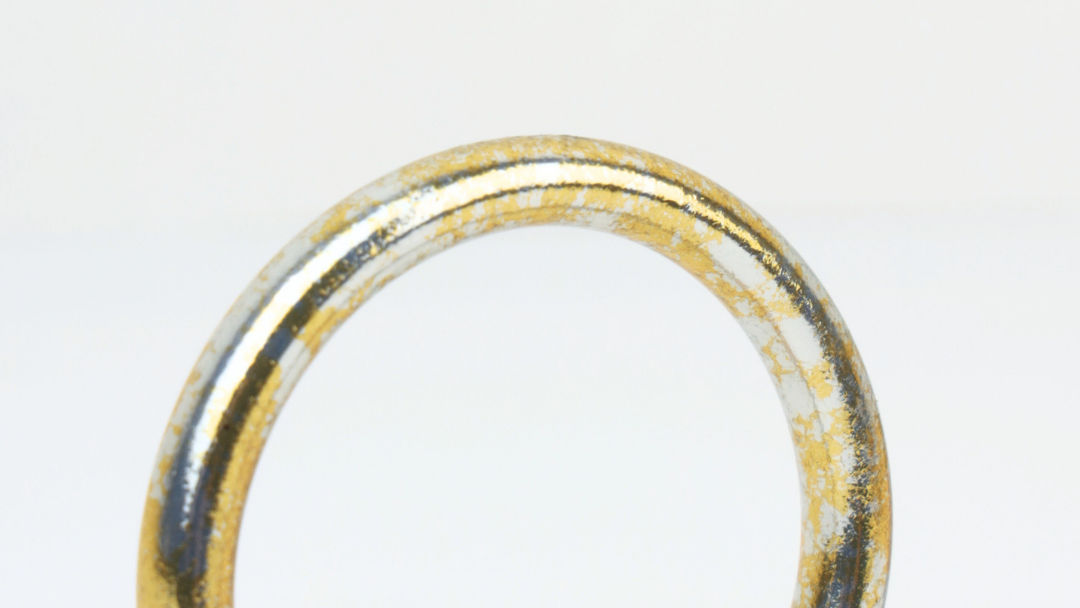
The Endless Circle: Bangle Meaning, History & Ritual Guide
Long before it was a fashion statement, the bangle was a promise. A simple, unbroken circle slipped over the hand and worn against the pulse, it has traveled with women across continents and centuries, marking weddings, celebrations and the quiet passage of ordinary days. To wear a bangle is to carry a shape that has no beginning and no end.
In this guide we explore the true bangle meaning: where the word comes from, where bangles originated, what they symbolize across cultures, and how the difference between a bangle and a bracelet shapes the way you wear them. Then we bring that ancient circle into the present with a simple Mindful Glamour® ritual you can practice every morning.
In this guide
- What is a bangle?
- Bangle meaning and symbolism
- Where did bangles originate?
- Bangles across cultures
- Bangle vs. bracelet: what's the difference?
- The modern bangle: All Weather Bangles®
- The Mindful Glamour Ritual
- Frequently asked questions
- Sources
What is a bangle?
A bangle is a rigid, circular bracelet, usually made without a clasp, worn by slipping it over the hand onto the wrist. Traditionally made from glass, metal, shell, wood or terracotta, bangles are often worn in stacks. Because the circle is unbroken, many wearers see the bangle as a symbol of eternity and wholeness.
That defining feature, a closed circle that slips over the hand, is what Dictionary.com uses to set a bangle apart from other bracelets. It is also why sizing matters: a bangle must pass over the widest part of your hand yet rest comfortably on the wrist. If you are choosing your first set, our guide to how to choose your bangle size walks you through it step by step.
Bangle meaning and symbolism
What does bangle mean? The English word entered the language around 1780 to 1790 from the Hindi banglī, a variant of bangrī, meaning a glass ring or armlet, according to Dictionary.com. But the meaning of the bangle runs far deeper than its name.
At BuDhaGirl, we see the bangle first as a circle: no beginning, no end, a quiet reminder of wholeness and of the daily cycle of beginning and returning. Across cultures, bangles carry more specific meanings too:
- Marriage and new beginnings. In many Indian traditions, a bride wears a special set of bangles, called a chura or chooda, on her wedding day and for a period afterward (Chura).
- Fertility and blessing. Marathi brides traditionally wear hirva chuda, green glass bangles, where green is associated with fertility and with the goddess Devi (Chura).
- Status and security. In the medieval Middle East, gold bracelets given at marriage were a form of wearable wealth and a bride's financial security (LACMA).
These meanings are cultural traditions, and they vary from family to family and region to region.

Etoile All Weather Bangles® (Set of 6)
Where did bangles originate?
Bangles are among the oldest forms of adornment we know. Some of the earliest evidence comes from the Indus Valley Civilization, in present-day Pakistan and northwest India. At Mohenjo-daro, archaeologists unearthed a small bronze figure in 1926, now known as the "Dancing Girl" and dated to about 2500 BCE. She wears 24 bangles on her left arm and 4 on her right. Scholars still debate whether that jewelry was decorative or a sign of rank (Smarthistory).
At nearby Harappa, excavations led by archaeologists Richard Meadow and Jonathan Mark Kenoyer found bangles made of marine shell and terracotta from as early as about 3000 to 2600 BCE. Shell bangles were shaped with stone tools, ground and polished, while terracotta bangles grew more varied over time, from painted to incised designs (Harappa.com).
Bangles across cultures
South Asia. In India, bridal bangle traditions vary by region. The Punjabi chura is usually red and white and was traditionally made of 21 bangles, though many brides now wear 7, 9 or 11. A bride once wore it for a full year; today about 40 days is common. Bengali and Odia brides wear shakha, white conch-shell bangles, paired with pola, red coral bangles (Chura).
The Middle East. In Fatimid-era Egypt and Syria (909 to 1171), surviving trousseau lists show that jewelry was the most valuable part of a bride's dowry. A gold bracelet in the LACMA collection is described by its curators as "a spectacular form of wearable wealth" (LACMA).
Today. The stacked bangle has become a signature of personal style once again, as our 2026 guide to the more-is-more wrist explores.
Bangle vs. bracelet: what's the difference?
Every bangle is a bracelet, but not every bracelet is a bangle. A bangle is rigid and ring-shaped, usually without a clasp so it slips over the hand, though some have a hinged opening (Dictionary.com). Here is how the most common styles compare.
| Style | Structure | How it goes on | Best for |
|---|---|---|---|
| Bangle | Rigid, closed circle | Slips over the hand | Stacking, everyday ritual wear |
| Cuff | Rigid with an opening | Slides on from the side of the wrist | A single statement piece |
| Chain bracelet | Flexible links | Fastens with a clasp | Delicate layering, charms |
| Beaded or stretch bracelet | Beads on cord or elastic | Rolls on over the hand | Casual, mixed-texture stacks |
Because a bangle has no clasp, there is nothing to fumble with and nothing to come undone. That simplicity is part of its quiet appeal, and part of why it lends itself so naturally to ritual.
The modern bangle: All Weather Bangles®
BuDhaGirl All Weather Bangles® are our modern interpretation of this ancient adornment. Our Gold AWB® are handcrafted in Thailand, with each bangle passing through the hands of more than 20 artisans, then sealed with our signature Serenity Prayer bead. Every AWB® is weightless, soundless, waterproof and TSA-proof, so it can stay on your wrist from poolside to boardroom to airport.
These are the styles our clients reach for most:

Aura Lumine All Weather Bangles® (Set of 6)
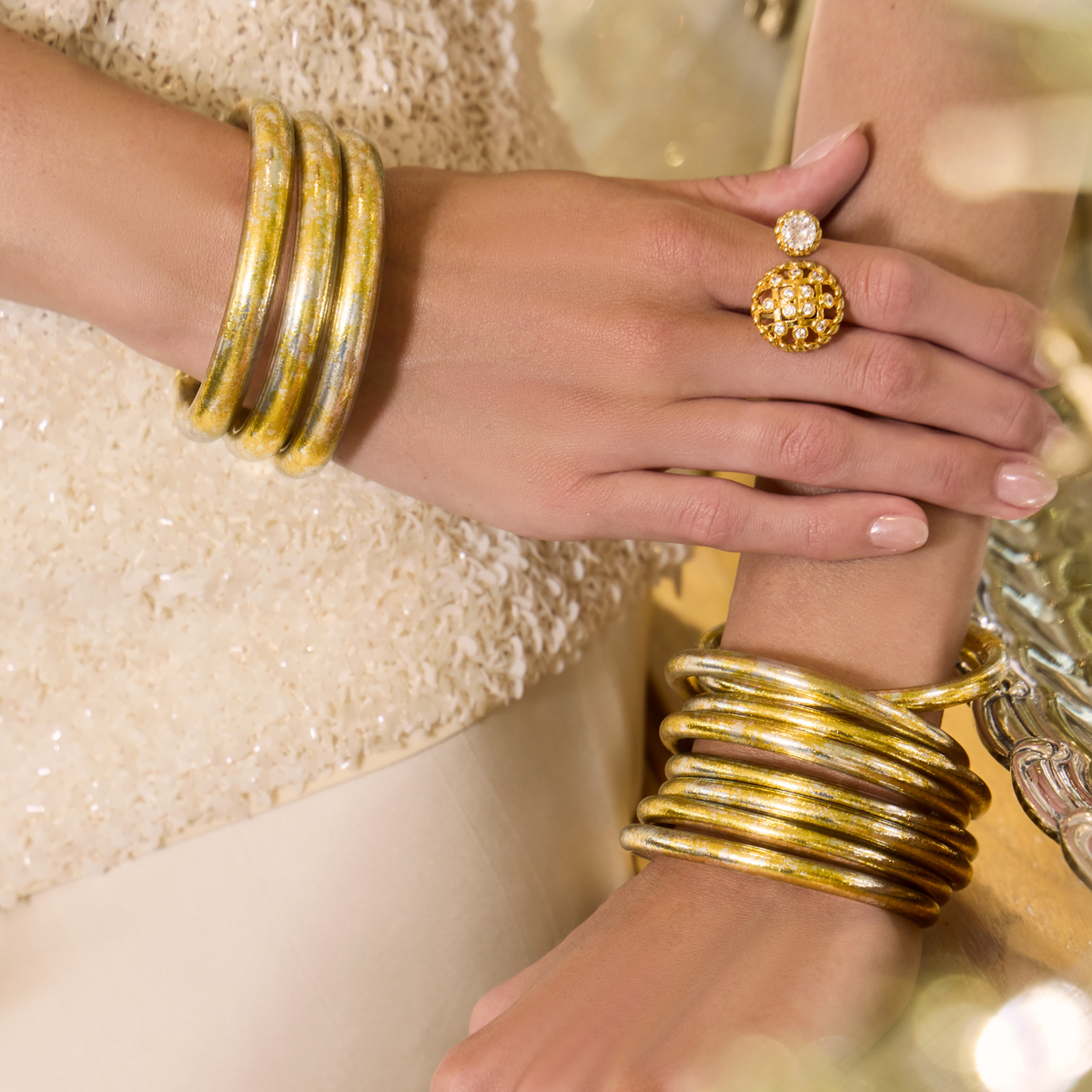
Aura is the middle ground of our gold palette, bridging our Signature Gold and the starlight softness of Etoile. At 3mm, the Lumine profile is half the width of our original AWB®, made for effortless layering.

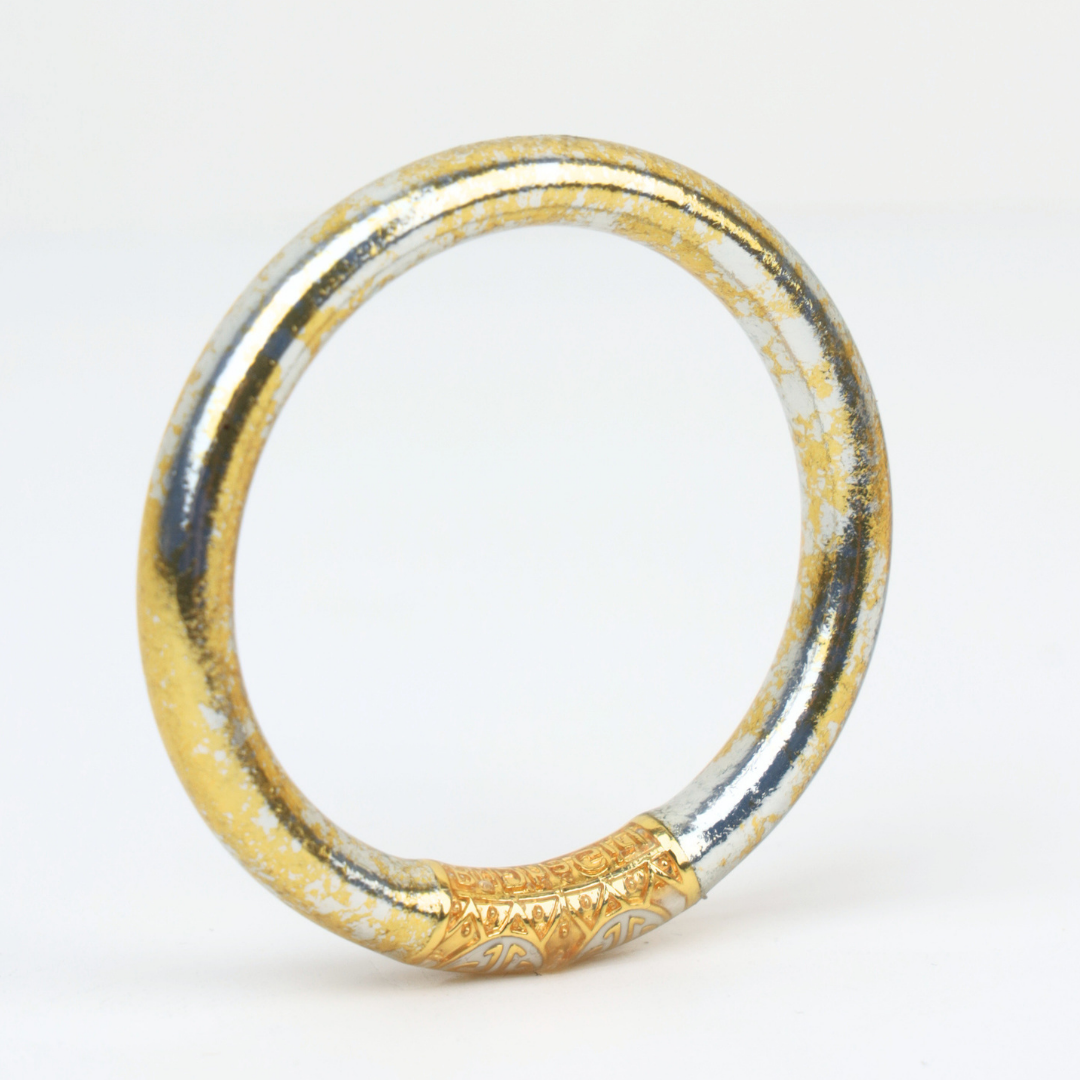
The Trilogy spirals gold, silver and champagne into a single bangle, made in Thailand by a specialized workshop of women artisans who spend years perfecting the technique.

Gold All Weather Bangles® (Set of 6) - Serenity Prayer
Our iconic Gold set of six carries the Serenity Prayer: "May I be granted the serenity to accept the things I cannot change, the courage to change the things I can, and the wisdom to know the difference." Curious about every style? Read what All Weather Bangles® are and the types we make.
The Mindful Glamour Ritual
For thousands of years, women have slipped bangles on with meaning. You can do the same, every morning.
Pause. Breathe. Before you reach for your phone, hold your All Weather Bangles® in your hand. Slide each bangle over your wrist one at a time, and with each one, set a single intention for the day: patience, courage, kindness, focus. At night, remove them one by one and offer a moment of gratitude for what the day brought. The circle closes, and tomorrow begins again. For a deeper practice, explore our morning ritual.
Begin your own ritual. Shop All Weather Bangles® and find the set that speaks to your intentions.
Frequently asked questions
What is the spiritual meaning of a bangle?
Many wearers see the bangle's unbroken circle as a symbol of eternity and wholeness. In many Indian traditions, bangles are closely tied to marriage: brides wear a special set, called a chura, on their wedding day and for a period afterward. These meanings are cultural traditions passed down through generations.
Where did bangles originate?
Some of the earliest evidence comes from the Indus Valley Civilization. A bronze figure from Mohenjo-daro, dated to about 2500 BCE, wears 24 bangles on her left arm, and shell and terracotta bangles from about 3000 BCE onward have been excavated at Harappa.
What is the difference between a bangle and a bracelet?
A bangle is a rigid, ring-shaped bracelet, usually without a clasp, that slips over the hand. "Bracelet" is the broader category and also includes flexible chain bracelets with clasps, cuffs with an opening, and beaded or stretch styles.
What does the color of a bangle mean?
It depends on the tradition. Punjabi bridal chura are usually red and white, Marathi brides wear green bangles associated with fertility, and Bengali brides pair white conch-shell shakha with red pola. Many people today simply choose colors that reflect their mood or intentions.
Can you wear bangles every day?
Yes. All Weather Bangles® are designed for everyday wear: they are weightless, soundless, waterproof and TSA-proof, so you can keep them on through work, travel and even a swim.
How many bangles should you wear?
There is no rule. Some prefer a single bangle; others stack six or nine. Our AWB® sets come in groupings of three, six and nine, with each bangle representing an intention for your day.
Sources
- Dictionary.com, "Bangle": definition and etymology.
- The MAP Academy, "Dancing Girl from Mohenjo-daro," Smarthistory, 2023.
- Richard H. Meadow and Jonathan Mark Kenoyer, "Early Developments of Art, Symbol and Technology in the Indus Valley Tradition," Harappa.com.
- "Chura (bangles)," Wikipedia, citing Oldenburg (2002), Shukla (2015) and others.
- Los Angeles County Museum of Art, "Bracelet, 11th century, Egypt or Syria," curatorial notes.
- Product details: BuDhaGirl product pages for Etoile, Aura Lumine, Trilogy and Gold AWB®.